Expert Analysis
AI in Events: Beyond Automation, Towards Better Decisions
How artificial intelligence can reshape the way Africa's MICE industry operates, uses information and delivers value.
Key Takeaways
- ▸The value of AI is not simply that it processes information faster. It is that it can help organisations understand what their information is telling them and make more informed decisions.
- ▸Cvent's 2026 Global Planner Sourcing Report found that 75% of surveyed event planners use AI in venue sourcing, and 84% expect AI to have a moderate to major impact on the meetings and events industry.
- ▸AI cannot compensate for poorly designed systems. The foundation must be sound: properly structured data, reliable infrastructure, secure systems and integrations.
- ▸For Africa, AI presents an opportunity to improve the competitiveness and operational capacity of the MICE industry.
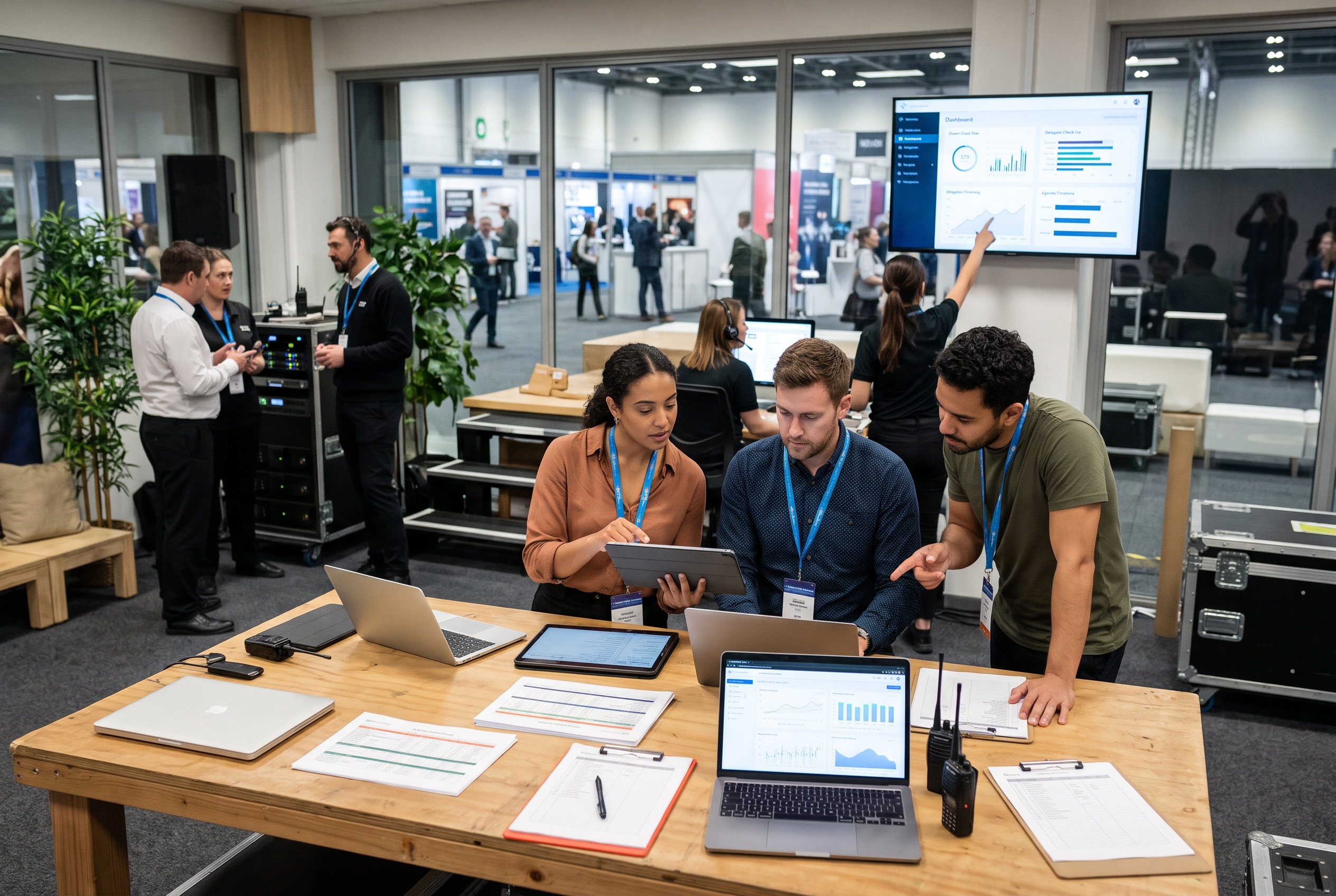
The events industry has always depended on coordination. Behind every successful conference, exhibition or business summit is an enormous amount of work: researching audiences, managing registrations, communicating with delegates, coordinating suppliers, preparing programmes, handling last-minute changes and ensuring that every part of the event comes together.
Much of this work happens away from the stage, often through spreadsheets, emails, separate platforms and countless manual follow-ups. It is here that artificial intelligence (AI) presents one of its most significant opportunities.
The conversation around AI in events has largely focused on automation, content generation and chatbots. These are useful applications, but they only scratch the surface. The greater opportunity lies in improving how event businesses operate, use information, make decisions and deliver value to clients.
From managing tasks to managing better information
One of the biggest challenges in event management is the volume of information that organisers must handle. Delegate details, supplier records, booking information, meeting requests, programme changes and communication histories are often spread across different systems.
AI can help bring this information together and make it more useful.
For example, an organiser could use AI to analyse registration trends, identify which attendee groups are responding to a campaign, highlight incomplete registrations or identify potential gaps in a programme. Instead of manually reviewing multiple reports, teams can obtain clearer insights and focus their attention where it is needed.
This is an important distinction. The value of AI is not simply that it processes information faster. It is that it can help organisations understand what their information is telling them and make more informed decisions.
Improving the entire event journey
AI has applications across almost every stage of an event.
During planning, it can support market research, venue comparisons, budget analysis, programme development and supplier sourcing. During registration, intelligent systems can assist with enquiries, identify incomplete submissions and guide participants through the process.
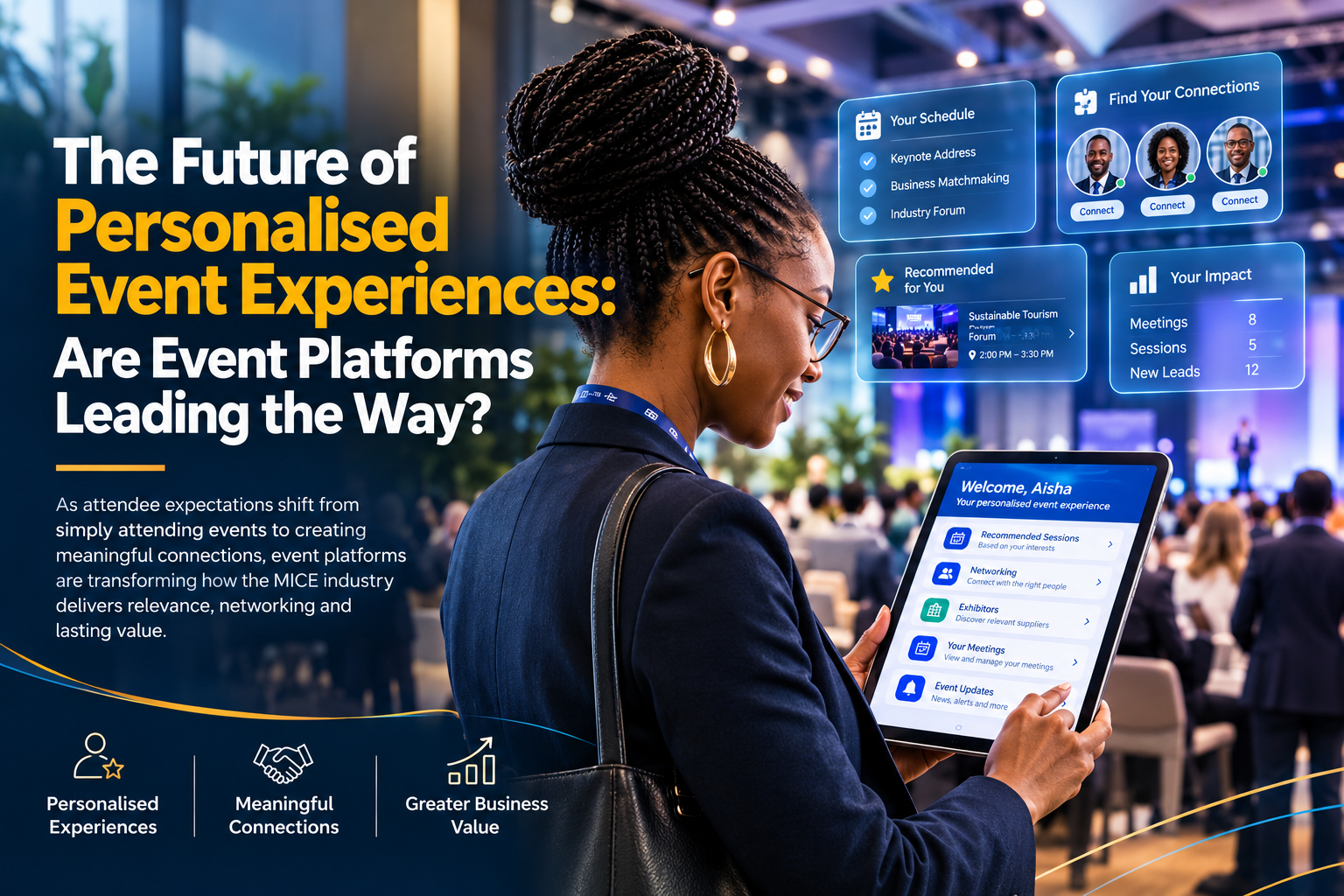
For larger conferences and exhibitions, AI can also improve attendee experiences by helping participants discover relevant sessions, exhibitors, speakers and potential business connections based on their interests and professional profiles.
The opportunities continue after the event. Organisers can analyse attendance patterns, engagement, feedback and business interactions to understand what worked, what did not and where improvements are needed.
This creates a more connected approach to event management, where information gathered at one stage informs decisions at the next.
The growing adoption of these applications is already evident. Cvent's 2026 Global Planner Sourcing Report found that 75% of surveyed event planners use AI in venue sourcing, including searching for venues, analysing attendee data and comparing proposals. The report also found that 84% expect AI to have a moderate to major impact on the meetings and events industry.
The business opportunity goes beyond efficiency
For event companies, the real question should not be how many tasks AI can automate, but how it can improve the business itself.
Consider the process of acquiring and managing clients. AI can help analyse enquiries, organise prospects, identify follow-up priorities and provide insight into which services are attracting demand. For an event company managing several projects, this can improve visibility across its sales pipeline and operational workload.
It can also support more accurate reporting. Rather than compiling information manually after every event, organisers can use connected systems to generate reports on registrations, attendance, engagement, expenditure and other performance indicators.
This matters because event businesses need to understand more than whether an event took place successfully. They need to know whether it achieved its objectives, delivered value to sponsors, generated meaningful business connections and justified the investment made by the client.
AI can help make that analysis more accessible, allowing event companies to move from reporting activities to demonstrating outcomes.
Why the technology behind AI matters
From a technology perspective, one important lesson is that AI cannot compensate for poorly designed systems.
An organisation may invest in sophisticated AI tools, but if its registration platform, customer records, financial information and event operations are disconnected, the technology will have limited value. Inconsistent data produces unreliable insights, while disconnected systems often create more work rather than less.
The foundation must therefore be sound: properly structured data, reliable infrastructure, secure systems and integrations that allow different platforms to communicate.
AI should be incorporated into the systems an organisation uses to run its business, rather than treated as another isolated tool. A well-designed event management platform, for instance, should be able to support registration, communication, scheduling, reporting and operational coordination, with AI assisting where it adds genuine value.
This is where technology planning becomes just as important as the choice of AI tools.
The human element remains essential
Events are fundamentally about people. Negotiating with a difficult supplier, understanding a client's expectations, managing a sensitive situation or making a decision when a conference is already underway requires judgement, experience and human understanding.
AI can provide information and recommendations, but it does not carry the responsibility for the outcome. Its responses can be inaccurate, its analysis can reflect incomplete data, and its recommendations may overlook important context.
There are also legitimate concerns around data protection. Event organisers handle personal information, including contact details, professional profiles, travel arrangements and sometimes payment-related information. Such data must be handled responsibly, with appropriate access controls, security measures and clear policies governing the use of AI.
The EventsAir State of Events 2026 report identifies limited expertise and data privacy concerns among the leading barriers to wider AI adoption. This reinforces the need for organisations to approach implementation with proper understanding and oversight.
The objective should be to give event professionals better tools, not to remove the expertise that makes their work valuable.
An opportunity for Africa's MICE industry
For Africa, AI presents an opportunity to improve the competitiveness and operational capacity of the MICE industry.
Many event businesses operate with lean teams, limited resources and processes that still depend heavily on manual coordination. Carefully implemented AI can help these organisations improve productivity, manage larger volumes of information and deliver more consistent services without necessarily increasing their operational costs at the same rate.
It can also support the development of more connected industry platforms, making it easier for buyers to identify suppliers, organisers to manage business relationships and delegates to discover relevant opportunities across destinations.
However, adoption must reflect the realities of individual markets. Connectivity, affordability, technical skills, data quality and access to reliable digital infrastructure will influence how effectively these solutions can be implemented.
The opportunity is not to adopt every new AI product entering the market. It is to identify the operational challenges holding businesses back and apply technology where it can make a measurable difference.
Beyond the technology
AI will undoubtedly change how events are organised. But its greatest contribution may not be found in the tasks it performs independently. It may be in the time it gives professionals to think, the information it makes easier to understand and the decisions it helps organisations make with greater confidence.
The future of event management will belong to organisations that understand both sides of this relationship: the capabilities of technology and the importance of human expertise.
Ultimately, a successful event is not measured by how much technology was used behind the scenes. It is measured by the experience delivered, the relationships created and the outcomes achieved. AI should make all three better.
Research references
The article draws on current industry research:
- ▸Cvent – 2026 Global Planner Sourcing Report: AI adoption in venue sourcing and its expected impact on the meetings industry.
- ▸EventsAir – The State of Events 2026: AI adoption barriers, expertise gaps and data privacy concerns.
- ▸MPI – Meetings Outlook, Q1 2026: AI usage trends among event professionals.












Join the conversation
0 comments — share your thoughts, ask questions and reply to others.
Log in with your account to join the discussion — it only takes a moment.
No comments yet.
Be the first to share your thoughts on this article.