Expert Analysis
Air Connectivity Is Africa's MICE Competitive Advantage
For international event organisers, choosing a destination involves more than selecting a venue or hotel. It also means considering how easily delegates can reach the city, how much the journey will cost and how reliably they can travel. For Africa's MICE industry, air connectivity is not just a transport issue. It is a competitive advantage.
Imagine organising an international conference expected to attract delegates from 30 countries. The venue is ready, hotels are secured, the programme is carefully planned and the destination offers everything delegates could want. But there is one challenge: getting there.
Some participants must take multiple connecting flights. Others face expensive tickets, inconvenient schedules or complicated visa procedures. For an event organiser, these challenges can influence attendance, increase budgets and ultimately affect the decision to host the event in that destination.
This is why air connectivity deserves a much bigger place in conversations about Africa's competitiveness in the global Meetings, Incentives, Conferences and Exhibitions (MICE) industry.
The Journey Is Part of the Destination
For international delegates, the event experience begins long before they arrive at the conference venue. It starts with searching for flights, comparing fares, arranging connections and planning the journey.
Direct flights, convenient connections and reliable schedules make a destination more accessible. They reduce travel time, simplify planning and make it easier for international participants to attend.
Unfortunately, connectivity between African cities remains a significant challenge. At a November 2026 meeting of tourism and aviation stakeholders in Namibia, the United Nations Economic Commission for Africa reported that only one in five city pairs across the continent has a direct daily flight. This means many travellers must connect through another destination, sometimes outside Africa, before reaching their final city.
For a business traveller, this can mean additional hours in transit. For an event organiser, it can mean higher travel costs, more complicated itineraries and a greater risk of travel disruptions.
The Price of Air Travel Matters
Accessibility is not only about whether a flight exists. It is also about whether people can afford to take it.
Airfares influence the total cost of attending an international event. When travel becomes expensive, organisations may reduce the number of employees they send, individual delegates may reconsider attending, and some potential participants may be priced out altogether.
The African Airlines Association's 2025 Annual Report, drawing on its 2024 study of passenger taxes, charges and fees, found that the average international departure tax in Africa was US$68, compared with US$32 in Europe and US$34 in the Middle East. The report also found that taxes and fees accounted for more than 35% of total ticket prices on average.
These figures highlight how the cost of air travel can extend beyond the airline's base fare. Government charges, airport fees and other aviation-related costs can add considerably to the final price paid by passengers.
For the MICE industry, the implications are clear. A destination may offer competitive conference packages and accommodation rates, but expensive flights can make the overall event less affordable.
This is particularly important for association conferences, academic meetings and regional industry events, where delegates may be paying their own way or relying on limited institutional travel budgets.
Africa Needs Stronger Connections Within the Continent
One of the most important opportunities lies in improving travel between African countries.
Africa has major business centres, emerging investment markets, growing tourism destinations and an expanding professional events industry. Yet travelling between two African cities can sometimes be less straightforward than travelling from either city to Europe or the Middle East.
This limits the movement of business travellers, event participants, exhibitors and industry professionals within the continent.
Stronger regional connectivity would make it easier to organise multi-country business events, attract regional association meetings and encourage delegates to participate in conferences outside their home markets.
It would also help destinations build on each other's strengths. A conference in Nairobi, for example, could attract participants from across East Africa more easily if regional flight options were frequent, affordable and dependable.
Improving these connections requires airlines to develop commercially viable routes, airports to strengthen their operations and governments to create more open and predictable aviation markets.
The Role of the Single African Air Transport Market
The African Union's Single African Air Transport Market (SAATM) was established to advance the liberalisation of air transport across the continent. Its broader ambition is to make it easier for African airlines to operate across participating markets, improve connectivity and support regional integration.
The initiative is particularly relevant to the MICE industry because more accessible air travel can expand the potential audience for African events.
The International Air Transport Association has highlighted the economic opportunity. Its analysis suggests that opening aviation markets and increasing connectivity in just 12 key African countries could generate an additional 155,000 jobs and US$1.3 billion in annual GDP in those countries.
However, policy commitments must translate into practical improvements. More open markets, competitive airline services, efficient approvals and reduced travel barriers are necessary if the benefits are to reach passengers and businesses.
Airports and Airlines Must Become Part of the MICE Conversation
Convention bureaux, tourism authorities and event organisers cannot treat aviation as a separate industry. Air connectivity should be considered when developing destination strategies and bidding for international events.
This creates an opportunity for closer collaboration between convention bureaux, airlines, airport operators, tourism boards, hotels and professional conference organisers.
For example, when pursuing a major international conference, destination stakeholders could work with airlines to understand the expected delegate markets, assess available routes and identify opportunities for additional capacity or improved schedules.
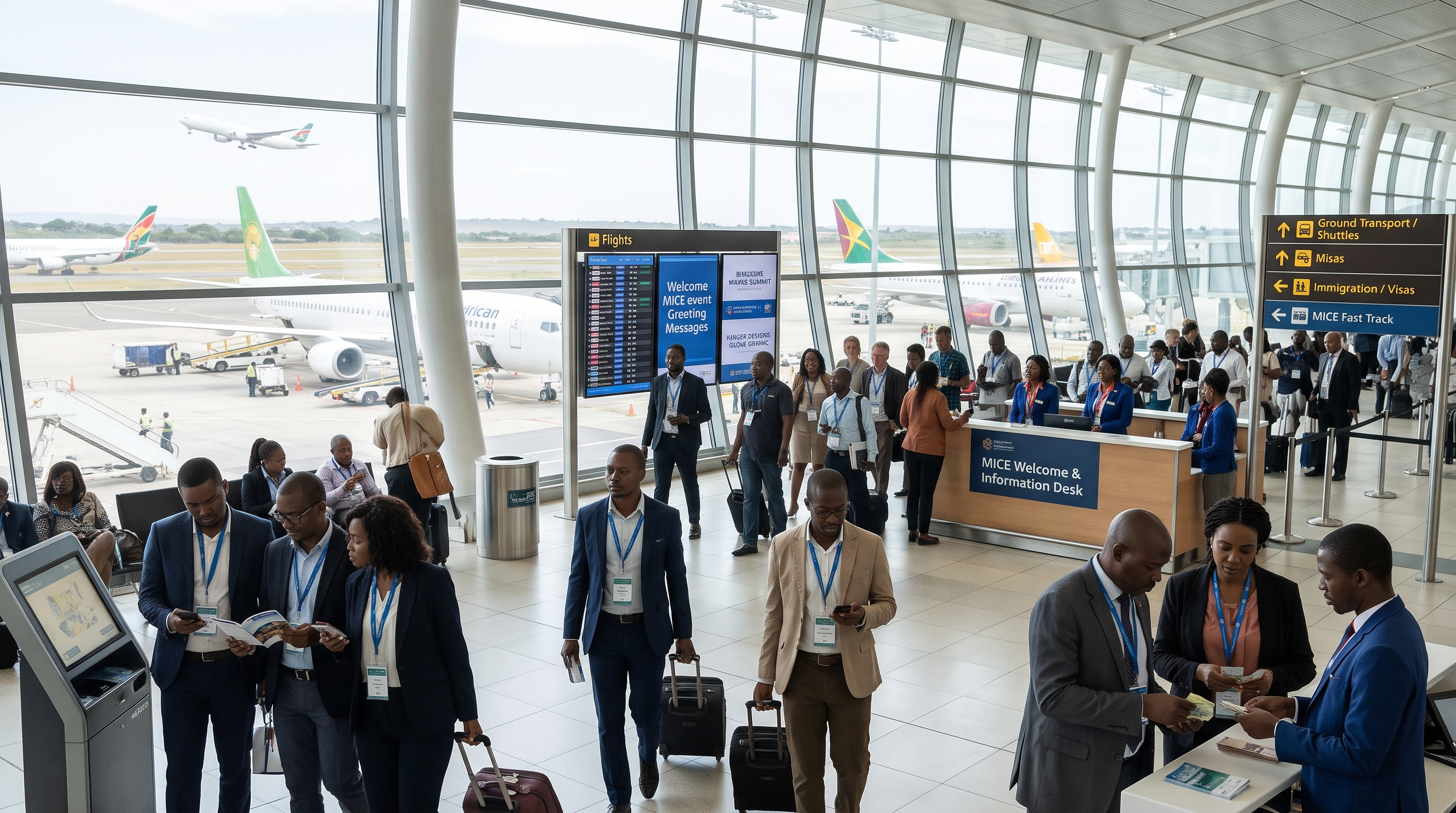
Airports also have an important role. Efficient immigration procedures, reliable ground handling, clear passenger information and convenient connections to hotels and event venues all contribute to the delegate experience.
In some cases, the availability of charter flights or coordinated group travel arrangements may also help support large international events.
The objective is to make the journey as seamless as possible, from the delegate's point of departure to the event destination.
Connectivity Should Influence Where Africa Invests
As African cities develop their MICE infrastructure, aviation connectivity should be part of the investment conversation.
Building a convention centre without considering how international delegates will reach it creates an incomplete destination proposition. Similarly, expanding hotel capacity without sufficient air access may limit the market those hotels can realistically serve.
This does not mean every city must become a major international aviation hub. Different destinations can compete through different strengths. Some may serve as regional gateways, while others can specialise in particular event sectors and build connectivity around specific markets.
What matters is that infrastructure development, aviation planning and destination marketing are aligned.
Cities should understand where their potential delegates come from, which routes serve those markets, where connectivity gaps exist and what improvements would make the greatest difference.
Turning Connectivity into a Competitive Advantage
Africa's MICE industry has significant room to grow, but attracting more international events will require practical improvements across several sectors.
Governments must continue working towards more affordable air travel, simpler visa procedures and effective implementation of regional aviation agreements. Airlines need to explore opportunities for stronger regional networks, while airports and tourism stakeholders must work together to improve the overall travel experience.
The industry also needs to measure accessibility more seriously. Flight frequency, direct connections, average journey times, airfare affordability and visa requirements should all inform how destinations assess their competitiveness.
Ultimately, an international event is only as accessible as the journey required to attend it.
Africa has the venues, hospitality, business opportunities and destination experiences to attract the world. The next step is ensuring that reaching these opportunities becomes easier, more affordable and more reliable.
Because in the global MICE market, the destination experience may begin when delegates arrive, but the decision to attend often begins with the journey.